Mount Meru trek — Tanzania's second-highest peak

Tanzania Trekking

Mount Meru

4,566 m • Arusha National Park • Tanzania's second-highest peak • 3 or 4 days

4,566 m / 14,980 ftSummit elevation
3 or 4 DaysStandard trek durations
Moderate–HardRequires good fitness
Wildlife on TrailGiraffes, buffaloes, colobus monkeys

The mountain

Africa's fourth-highest peak — and one of its best-kept secrets

Mount Meru is a dormant stratovolcano rising to 4,566 m (14,980 ft) inside Arusha National Park, just 70 km west of Kilimanjaro. It is Tanzania's second-highest mountain and Africa's fourth-tallest peak. More than 250,000 years ago a massive volcanic eruption blew away its eastern flank, leaving a dramatic horseshoe crater open to the east — one of the most striking geological features in East Africa.

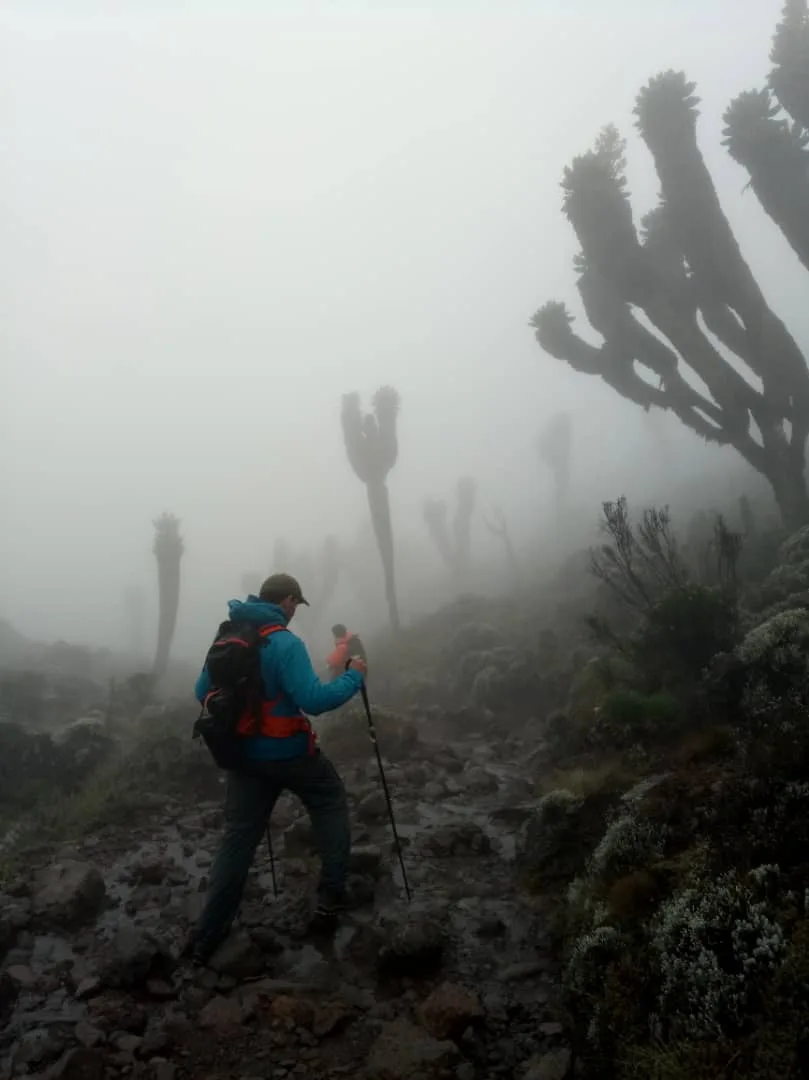
Despite sitting in Kilimanjaro's shadow, Mount Meru offers a genuinely wild and rewarding trek. The trail passes through lush montane forest alive with colobus monkeys, passes open savanna where giraffes and buffaloes graze freely, climbs through giant heather moorland, and delivers breathtaking views across the Arusha plains and, on a clear dawn, straight to Kilimanjaro's ice cap from the summit.

Crucially for Kilimanjaro-bound trekkers, Mount Meru reaches above 4,500 m — high enough to trigger meaningful altitude adaptation. Climbers who spend two nights at elevation on Meru before tackling Kilimanjaro consistently report higher energy levels and fewer altitude symptoms on the bigger mountain.

Kilimanjaro visible from Mount Meru summit ridge

Why climb Meru

More than an acclimatisation climb

Kilimanjaro Acclimatisation

Sleeping above 3,500 m on Meru triggers red-blood-cell production. Climbers who do Meru first have a measurably higher Kilimanjaro summit success rate.

Wildlife Encounters

The Momella Route passes through open game country. Giraffes, warthogs, buffaloes, zebras and colobus monkeys are regularly seen on the lower slopes.

Spectacular Crater Views

The summit ridge follows the inner crater rim, with jaw-dropping drops into the ash cone below and sweeping views of the Arusha plains.

Far Fewer Crowds

While thousands climb Kilimanjaro each month, Meru sees a fraction of that traffic — giving you a quieter, more personal mountain experience.

The route

Momella Route — the only trail to the summit

Mount Meru has one designated trekking route: the Momella Route, beginning at Momella Gate on the mountain's eastern flank and climbing the northern crater rim to the summit. The route is used for both the 3-day and 4-day itineraries. A mandatory armed park ranger accompanies all trekkers to protect against wildlife encounters.

The trail ascends through five distinct vegetation zones: open savanna, montane rainforest, giant heather, moorland and alpine desert. Key landmarks include the famous Fig Tree Arch (a huge fig tree whose roots have grown over the path to form a natural archway), Miriakamba Hut (the first overnight camp), Saddle Hut (base camp for the summit push), the subsidiary summit of Little Meru (3,794 m), and the dramatic waypoints of Rhino Point (3,800 m) and Cobra Point (4,350 m) on the pre-dawn summit ridge.

3-Day Itinerary

Mount Meru in 3 Days

3 Days / 2 NightsModerate–Hard
Day 1

Momella Gate → Miriakamba Hut

Distance: ~10 km • Ascent: ~1,000 m • Time: 4–5 hours • Altitude: 1,500 m → 2,514 m

Begin at Momella Gate (1,500 m / 4,920 ft) inside Arusha National Park, where you collect your mandatory armed park ranger. The trail enters open savanna where giraffes and buffaloes are a common sight, before ascending into lush montane forest. Look out for black-and-white colobus monkeys in the canopy. A highlight early on is the Fig Tree Arch — a giant fig whose aerial roots have formed a natural tunnel over the path. The trail crosses the Njeke River and climbs steadily to Miriakamba Hut (2,514 m / 8,250 ft), a comfortable mountain hut with dormitory beds and basic meals available on-site. Overnight at Miriakamba Hut.

Day 2

Miriakamba Hut → Saddle Hut → Little Meru (optional)

Distance: ~4 km • Ascent: ~1,050 m • Time: 3–4 hours • Altitude: 2,514 m → 3,566 m

A shorter but steeper day through pleasant forest glades that open into giant heather and moorland. The trail climbs past Mgongo wa Tembo (Elephant Back ridge) with expanding views of the crater below. Reach Saddle Hut (3,566 m / 11,700 ft), situated on the saddle between the main summit and Little Meru. In the afternoon, an optional 2-hour return side trip leads to the top of Little Meru (3,794 m / 12,450 ft) — a worthwhile acclimatisation walk with clear views down into the ash cone. Early dinner and briefing for the summit night. Overnight at Saddle Hut. Bedtime by 19:00.

Day 3

Saddle Hut → Summit → Momella Gate

Distance: ~5 km ascent + ~19 km descent • Ascent: ~1,000 m • Time: 4–5 hrs up, 6–8 hrs down • Summit altitude: 4,566 m

Wake at 01:00 for a midnight summit push by headtorch. The trail rises steeply above the treeline, reaching Rhino Point (3,800 m) — named for the rare black rhinos that once roamed this area. The path then follows the narrow crater rim with spectacular drops into the inner cone on the left and open views to the plains on the right. Pass Cobra Point (4,350 m) before the final exposed ridge walk to Socialist Peak / Uhuru wa Meru (4,566 m / 14,980 ft), usually timed to coincide with sunrise behind Kilimanjaro. After summit photos, descend all the way back through Saddle Hut and Miriakamba Hut to Momella Gate for road transfer back to Arusha or Moshi.

4-Day Itinerary

Mount Meru in 4 Days — Recommended

4 Days / 3 NightsModerate–Hard
Day 1

Momella Gate → Miriakamba Hut

Distance: ~10 km • Ascent: ~1,000 m • Time: 4–5 hours • Altitude: 1,500 m → 2,514 m

Collect your armed park ranger at Momella Gate and begin the ascent through open savanna — giraffes, buffaloes, warthogs and zebras are common on this lower section. Enter montane forest, pass through the famous Fig Tree Arch, and follow the trail through colobus monkey territory to Miriakamba Hut (2,514 m). More relaxed pace than the 3-day option. Overnight at Miriakamba Hut.

Day 2

Miriakamba Hut → Saddle Hut → Little Meru

Distance: ~4 km main + ~3 km side trip • Ascent: ~1,050 m + 228 m • Time: 5–6 hours total • Altitude: 2,514 m → 3,566 m (Little Meru: 3,794 m)

Climb steeply through forest glades, giant heather and moorland to Saddle Hut (3,566 m). After lunch and rest, make the acclimatisation side trek to Little Meru (3,794 m / 12,450 ft), a 2-hour round trip with superb views of the crater and the summit ridge you will follow tomorrow night. Return to Saddle Hut. Early dinner and summit briefing. Overnight at Saddle Hut.

Day 3

Saddle Hut → Summit → Saddle Hut

Distance: ~5 km each way • Ascent: ~1,000 m • Time: 4–5 hrs up, 3–4 hrs down • Summit altitude: 4,566 m

Start at 01:00–02:00. Ascend by headtorch to Rhino Point (3,800 m), then along the exposed crater rim to Cobra Point (4,350 m), and finally to Socialist Peak (4,566 m) — arriving at sunrise for an unforgettable view of Kilimanjaro lit by the first light. The crater drops over 1,500 m to the ash cone below. Descend back to Saddle Hut for a late breakfast and a much-deserved rest. Overnight at Saddle Hut (or Miriakamba Hut if you prefer more descent).

Day 4

Saddle Hut → Momella Gate

Distance: ~14 km • Descent: ~2,066 m • Time: 4–5 hours • Altitude: 3,566 m → 1,500 m

Descend through Miriakamba Hut and back into the forest and savanna zones to Momella Gate. A gentler final day allows time to enjoy the wildlife and forest on the way down. Transfer back to Arusha or Moshi on arrival at the gate.

Before you go

Mount Meru essentials

Starting Point

Momella Gate, Arusha National Park — approx. 25 km from Arusha town. We arrange all transfers from Moshi or Arusha.

Mandatory Armed Ranger

All trekkers must be accompanied by an armed TANAPA ranger. KCA arranges this as part of your climb permit and logistics.

Mountain Huts

Miriakamba Hut (2,514 m) and Saddle Hut (3,566 m) offer bunk beds. Meals and drinks are available from the hut caretaker at mountain prices.

Best Season

January–March and June–October are the driest and clearest months. Avoid the long rains (April–May) for the best summit visibility.

Gear & Equipment

Warm layers, waterproofs, headtorch, trekking poles and good hiking boots are essential. We can arrange gear rental in Moshi.

Park Fees

Arusha National Park entry and hut fees apply. All fees are included in KCA's quoted climb price — no hidden costs.

Add Mount Meru to your Tanzania adventure

Climb Meru before Kilimanjaro for better acclimatisation — or as a standalone summit in its own right. Our Moshi team will build the logistics around your dates.